
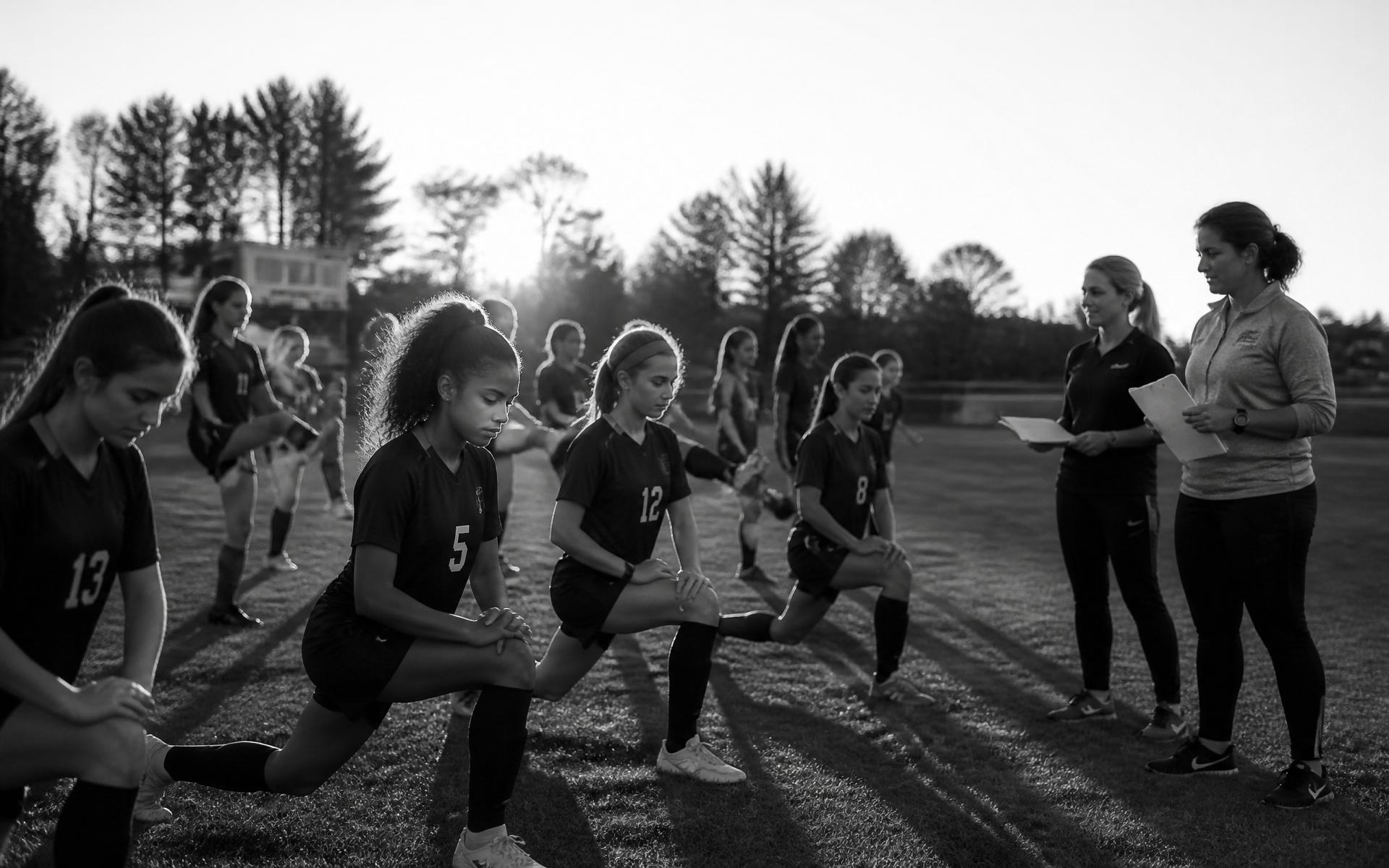
Girls get injured differently.
Prevention shouldn't be one-size-fits-all.
Youth sports systems were never designed around female physiology. G-MIP transforms sports medicine research into practical injury prevention systems that schools, coaches, and communities can implement — starting this season.
Free, evidence-based resources
The numbers tell a
story we can change.
Female athletes are asking for the same tools their male peers already have. The evidence exists — implementation is the gap.
The issue isn't injuries.
It's the systems around them.
Research already tells us what works. Schools, coaches, and athletes still struggle to put it into practice — consistently, every week.
Decades of female-specific sports medicine research exists in journals.
Findings rarely reach the practice field or the sideline.
Without standardized tools, prevention is inconsistent across teams.
Athletes receive uneven education about their own bodies.
Preventable injuries keep happening in the exact same patterns.
A complete system — not a
one-time presentation.
G-MIP works through eight interlocking initiatives, each designed to translate evidence into daily practice.
Four-Week Workshop Series
A standardized in-school program covering warm-ups, ACL prevention, balance, and recovery.
Coach Integration Tools
Warm-up templates, sideline cards, and decision support that fit inside real practices.
The G-MIP Hub
A digital resource center for athletes, coaches, parents, and healthcare providers.
Rehabilitation Kits
Equipment and guided protocols distributed to schools that lack access to recovery tools.
Community Outreach
Screening days, family education, and partnerships with local health providers.
Student Leadership
Peer-led ambassador programs that embed prevention into team culture.
Systems Advocacy
Working with schools, districts, and policymakers to standardize female-specific practice.
Strategic Partnerships
Collaborations with sports medicine clinics, universities, and youth sports organizations.
Female-specific —
because bodies are.
Much of youth sports programming was built around research on male athletes. G-MIP bridges that implementation gap with practices grounded in female physiology.
Biomechanics
Wider pelvis and Q-angle create different force vectors through the knee.
Neuromuscular Control
Differences in muscle firing patterns influence landing and cutting.
Hormonal Influences
Cyclical changes in ligament laxity affect injury risk windows.
Landing Mechanics
Female athletes are more likely to land with knees collapsed inward.
Growth & Development
Adolescent growth spurts change coordination and joint stress patterns.
Concussion Presentation
Symptoms often present and resolve differently than in male peers.
Recovery Patterns
Return-to-play timelines and rehabilitation needs are not identical.
From systemic problem
to safer culture.
Long-term systemic change — not isolated one-off events. This is the path we walk with every school we partner with.
- Step 01
Systemic Problem
Female-specific research exists — but rarely reaches practices, gyms, or fields.
- Step 02
Education
Athletes and coaches learn evidence-based prevention in a structured workshop series.
- Step 03
Consistent Practice
Standardized warm-ups, drills, and tools become part of every training week.
- Step 04
Behavior Change
Prevention becomes a habit — not an add-on — for the whole team culture.
- Step 05
Reduced Injury Risk
Non-contact injuries drop; athletes stay in the game they love.
- Step 06
Safer Culture
A generation of female athletes grows up in systems built for them.
Bring G-MIP to your school this season.
Workshops, coach tools, and rehabilitation kits — designed to fit inside the way you already run practice.